Skip to content
PayoutPrism

Credit Card Surcharge Calculator

Enter the sale and your processing rate. We work out the surcharge that covers the fee exactly, the fee on the surcharge included, then check it against Visa’s cap.

$
%
$
Approach
You keep
$99.62

from a $102.90 payment · fees take $3.28 (3.2%)

  • You keep96.8%
  • Payment processing3.19%
  • −$3.28
    2.9% × $102.90 + $0.30
Total fees−$3.28 3.2%
You receive$99.62

Covering every cent would take $3.30 (3.30%), above the 2.9% cap, so $0.40 of the fee stays with you.

Surcharges are allowed on credit cards only, never on debit or prepaid cards, and must be disclosed at the entrance, at checkout and on the receipt.

Connecticut, Maine, Massachusetts, Oklahoma and Puerto Rico prohibit surcharging; Colorado, Minnesota, New Jersey and New York have their own requirements (Visa’s understanding as of Feb 15, 2024).

Compare platforms →

Nearby prices

Tap a row to use it
PriceFeesYou keep
$1.05 4.1%$24.68
$1.79 3.5%$49.66
$2.54 3.3%$74.64
now$3.28 3.2%$99.62
$4.03 3.1%$124.60
$4.78 3.1%$149.57
$5.52 3.1%$174.56
Does this match your statement?

How much to surcharge to cover your fee

The surcharge that leaves you exactly whole is (sale × rate + fixed fee) ÷ (1 − rate), because your processor charges its rate on the surcharge too. On a $100 sale at 2.9% + 30¢ that’s $3.30.

The catch is the cap. Visa allows a surcharge on credit cards only, no higher than your merchant discount rate or 3%, whichever is lowest (Visa U.S. Merchant Surcharge Q&A). With a 2.9% rate, the most you can add on $100 is $2.90, so a few cents of fee stay with you.

$100 saleThey payFeesFee rateYou keep
Surcharge · 2.6% + 15¢$102.60$2.822.75%$99.78
Surcharge · 2.9% + 30¢$102.90$3.283.19%$99.62
Surcharge · 3.5% + 10¢$103.00$3.713.60%$99.29
Cash discount · 2.9% + 30¢$103.30$3.303.19%$100.00

Surcharge Fee: How Much You Can Add in the US

Three rules decide the surcharge fee you’re allowed to add:

  1. Card type. Credit only. Debit and prepaid cards can’t carry a surcharge, even when the customer presses “credit”.
  2. Amount. No more than your cost of acceptance or 3%. If your rate is 3.5% on typed-in cards, you still stop at 3%.
  3. Disclosure. Signs at the entrance and at checkout, and the surcharge shown on every receipt. Visa also expects 30 days’ notice to your acquirer before you start.
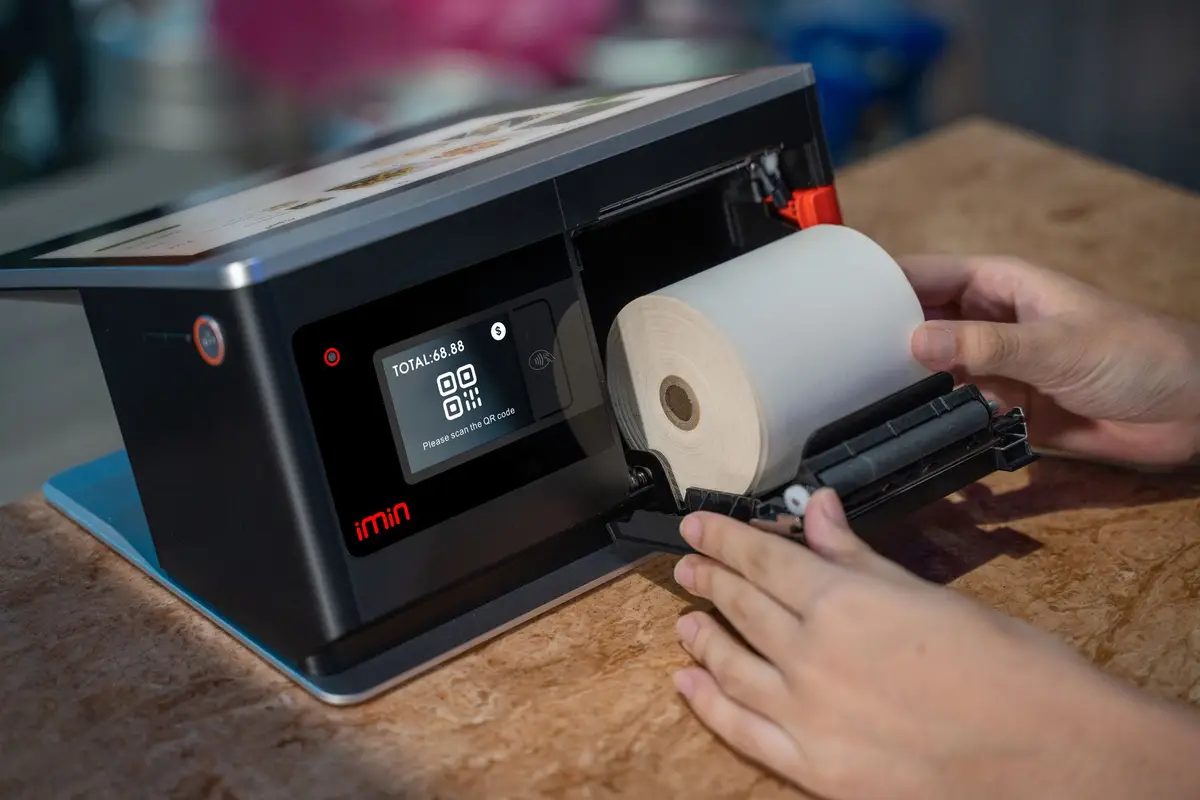
Hands loading receipt paper into a point-of-sale terminal
Photo: iMin Technology / Pexels

State law sits on top. As of February 2024, Visa understood that Connecticut, Maine, Massachusetts, Oklahoma and Puerto Rico prohibit surcharging, and Colorado, Minnesota, New Jersey and New York add requirements. We’re not lawyers; check your state before you start.

Cash Discount Program vs Surcharge: Same Math, Different Rules

A cash discount program raises the list price to cover the card fee and gives cash payers money off. Card customers pay the same total either way; what differs is the framing and which rules apply. Discounts for cash are generally allowed where surcharges aren’t, which is why some businesses in prohibiting states use them. The calculator’s Cash discount mode shows the list price and the discount.

Credit Card Surcharge fees
Checked October 24, 2026
FeeAmountCharged onWhen
Maximum surcharge (Visa US)Your merchant discount rate or 3%, whichever is lowerCredit card purchasesEvery salesource
Debit and prepaid cardsNo surcharge allowed—Every salesource
State rulesProhibited in CT, ME, MA, OK, PR—CO, MN, NJ, NY have requirementssource
Customers paying by card in a cafe
Photo: Vitaly Gariev / Pexels

Not sure what your rate actually is? Work out your effective rate first with the credit card processing fee calculator.

Questions people ask

How much can I surcharge on a credit card?

Under Visa’s US rules, no more than your merchant discount rate for that card or 3%, whichever is lower. Debit and prepaid cards can’t be surcharged at all.

Is it legal to add a surcharge to credit card payments?

In most states, yes, with disclosure. Visa understands that Connecticut, Maine, Massachusetts, Oklahoma and Puerto Rico prohibit surcharging, and Colorado, Minnesota, New Jersey and New York have their own requirements. Check your state’s current law.

What’s the difference between a surcharge and a cash discount?

A surcharge adds a fee for credit card payments; a cash discount lists a higher price and takes money off for cash. The maths is the same, but card-network and state rules treat them differently.

Why isn’t my surcharge just my processing rate?

Because the processor also charges its rate on the surcharge. To cover 2.9% + 30¢ on $100 exactly, you’d need $3.30, not $3.20.

Sources

Every rate above comes from Credit Card Surcharge’s own pages, read on October 24, 2026. Platforms change fees with little notice: we re-check these pages automatically and update the calculator when they move. Your Credit Card Surcharge statement is the final word. How we check fees